
Lia Fáil Journal · Design Guide
How to Choose Diamond Shapes for a Toi et Moi Ring
The most compelling two-stone ring begins not with two beautiful diamonds, but with the conversation between them.
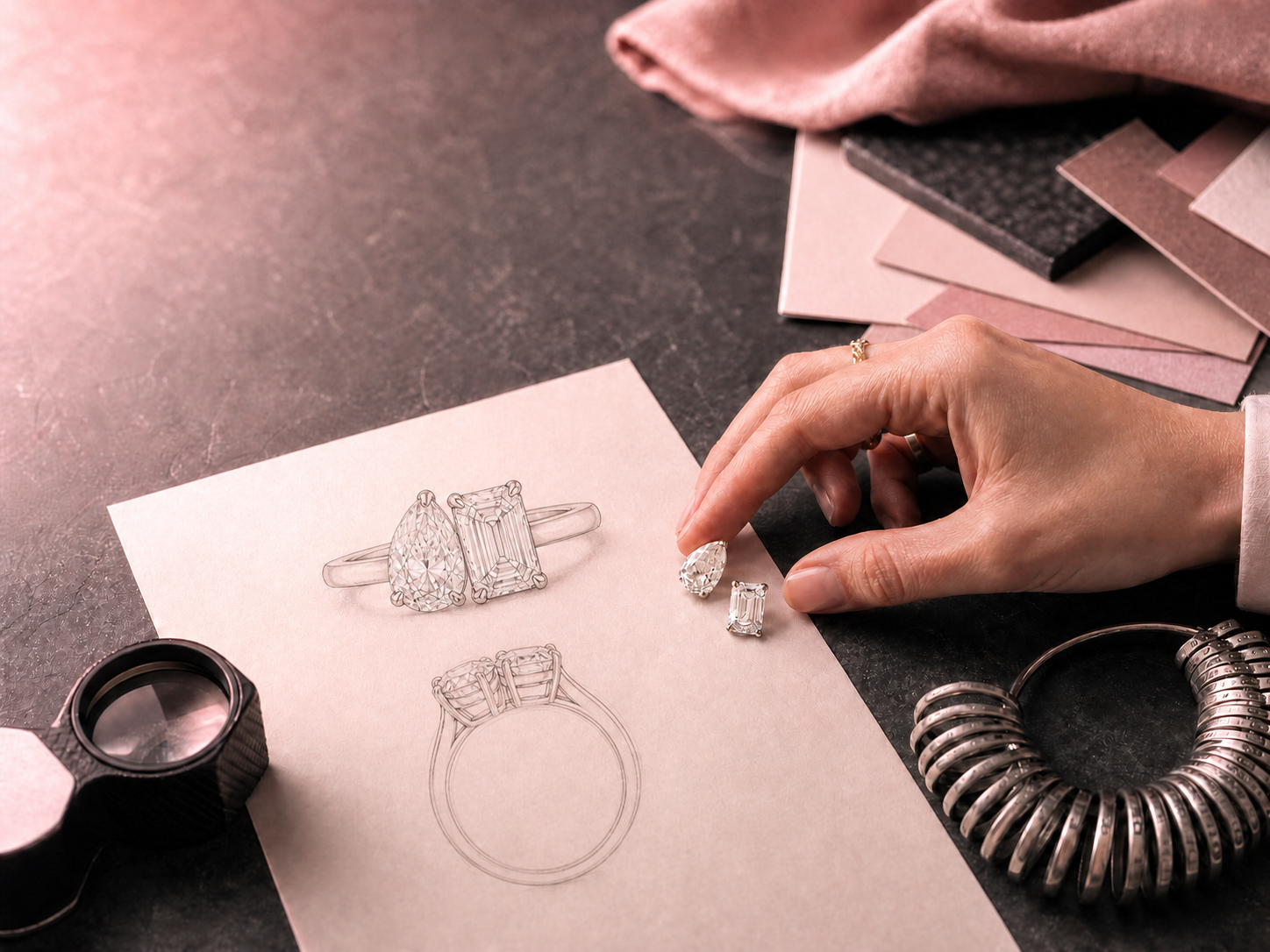
A Toi et Moi ring is defined by the relationship between two stones. Their individual beauty matters, but so do their shape, proportion, orientation and setting. The right combination creates a two-stone diamond ring that feels balanced from every angle.
This is why choosing a Toi et Moi design is different from selecting a solitaire. You are not asking only, “Which diamond do I love?” You are deciding how two distinct forms should meet. They may mirror one another, create a deliberate contrast, or appear to move across the hand. The best pairing is not necessarily the most perfectly matched. It is the one in which each diamond retains its character while contributing to a coherent whole.
Before comparing carat weights or imagining a final setting, begin with the visual language you want the ring to speak. Quiet and architectural? Soft and romantic? Open and asymmetric? That first instinct gives every later choice a clearer direction.
01 · Read the whole form
Start With the Overall Silhouette
Look at the ring as a single silhouette before studying either diamond on its own. From a distance, does the design feel elongated, open, symmetrical or directional? An elongated silhouette can travel gracefully along the finger, while a wider composition creates more visual presence across the hand. A compact pairing may feel intimate and precise; a more open arrangement can feel contemporary and expressive.
Orientation has as much influence as shape. A pear diamond can point toward the fingertip, angle inward toward its partner or sit diagonally across the band. An emerald cut can stand upright for a formal, architectural rhythm or turn east-west to make the ring feel broader and calmer. Even two diamonds of the same shape can tell very different stories when their angles change.
Begin with the gesture of the ring. The diamonds should feel as though they are meeting with intention, not simply occupying the same band.
Use photographs of the design at hand scale whenever possible. A close crop can make every stone look commanding, but the true test is how the pair sits within the proportions of the finger. The shape of the hand, preferred wearing finger and desired everyday presence are all part of the composition.
02 · Give each stone a voice
Understand Different Diamond Shapes
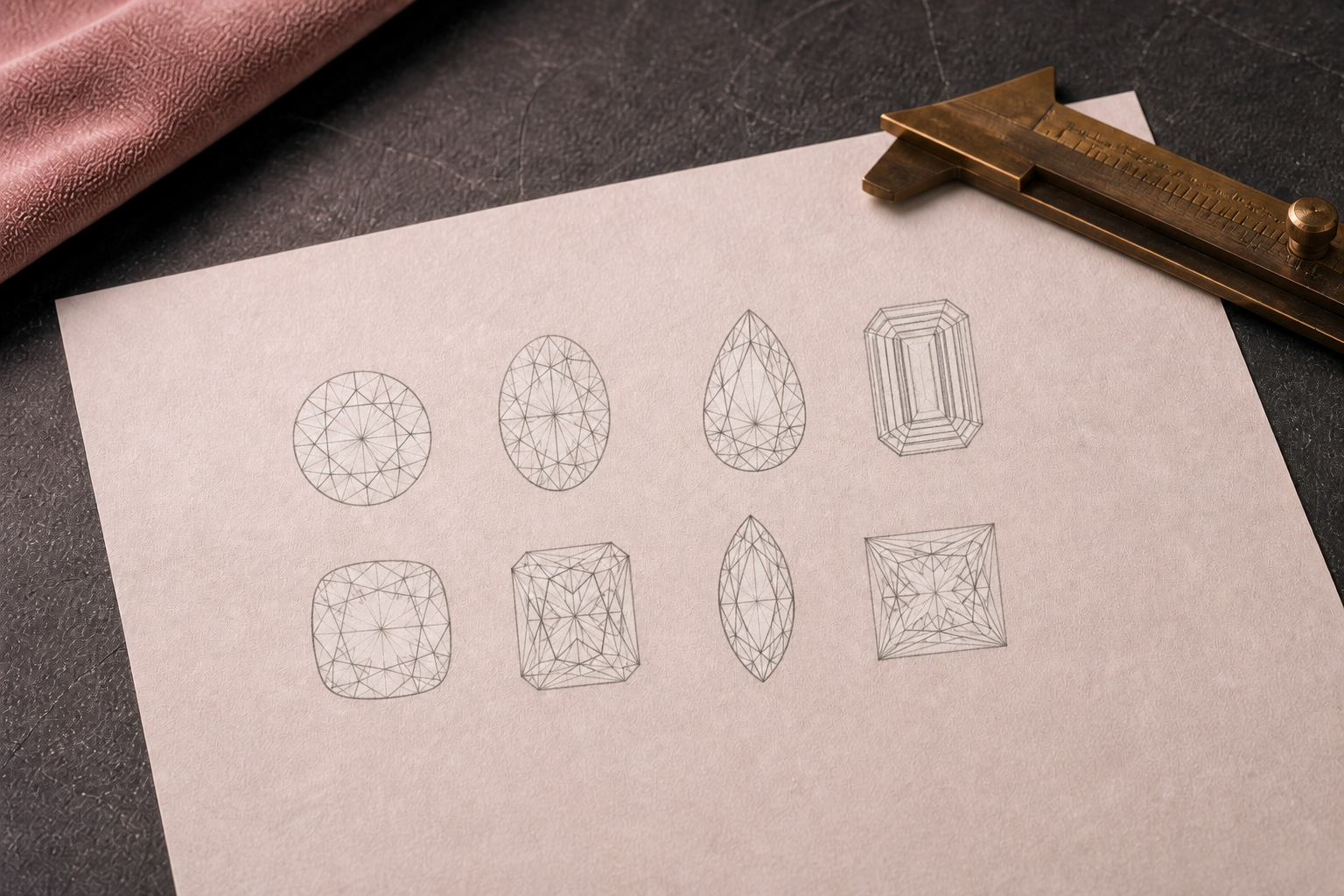
Diamond shape changes more than the outline. It affects how the eye moves, where light gathers and whether a pairing reads as soft, graphic or deliberately unexpected. Rather than searching for a universally “best” cut, consider the role each diamond will play.
Round
Bright and visually centered. Its balanced outline can calm a more directional partner.
Oval
Fluid and versatile. The elongated curve brings softness without losing visual length across the finger.
Pear
Directional and expressive. Its tapered point creates movement, while the rounded end keeps the form soft.
Emerald
Linear and composed. Long step facets give the design structure and a quieter, hall-of-mirrors rhythm.
Cushion
Softly geometric. Rounded corners bring warmth while the broader outline gives the pairing presence.
Radiant
Architectural in outline and lively in light. It connects clean geometry with brilliant-style energy.
Marquise
Elongated and distinctly directional. Its two pointed ends create an elegant line across or along the finger.
Princess
Crisp and modern. The square silhouette adds structure and makes a strong counterpoint to a curved cut.
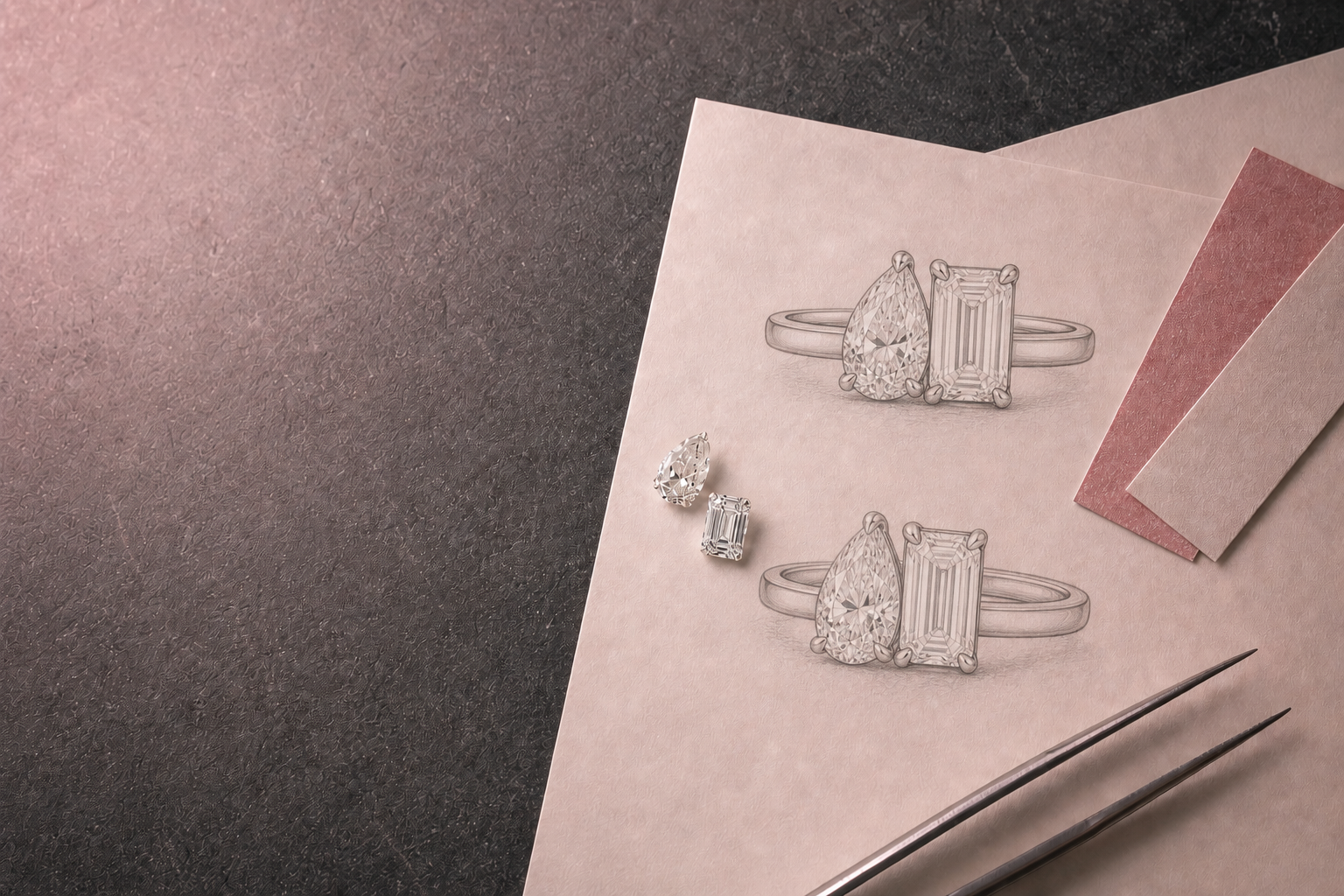
A pear-and-emerald Toi et Moi ring is compelling because the two cuts offer contrast: one is curved and directional, the other crisp and architectural. Pear and oval creates a gentler dialogue, while emerald and square radiant leans more graphic. Two matching shapes can also work beautifully, especially when a small difference in scale or angle keeps the composition from feeling static.
Shape alone does not determine sparkle or beauty. Individual proportions, cut quality and the way the two diamonds face up all affect the final impression. Compare the stones side by side under varied lighting, and look at them close up and at normal viewing distance.
03 · Make room for dialogue
Balance Proportion and Negative Space
The two diamonds do not need to have the same carat weight. In fact, carat is a measure of weight rather than face-up size, so equal numbers can still look different on the hand. What matters is visual weight: the area each stone appears to occupy, the strength of its outline and the way it catches the eye.
An elongated diamond may appear larger than a compact cut of similar weight. A bright, brilliant-style cut can feel more visually active beside the broad flashes of an emerald cut. Balance can therefore come from resemblance or contrast. One diamond may lead while the other answers; they simply should not appear accidental or disconnected.
Negative space is the third shape in every Toi et Moi ring. The opening between the diamonds can create lightness and allow each outline to remain legible. Too little space may make the pair look crowded. Too much can weaken the relationship or create an impractical gap. Study the curves made not only by the stones, but by the air around them.
Balance is not the same as sameness. A strong asymmetric design distributes attention without erasing difference.
Ask to see the proposed pair from the top, side and a natural three-quarter angle. The top view reveals the graphic composition; the side view shows height and how the settings relate; the three-quarter view is closest to how the ring will be experienced in motion.
04 · Let structure refine the idea
Choose the Setting for the Design
The setting is not a frame added after the creative work is finished. It changes the appearance, height and rhythm of the entire ring. Fine prongs expose more of a diamond's outline and can make the pair feel light. Their number and placement should follow the needs of each cut, protecting vulnerable points without visually overwhelming the stones.
A bezel introduces a clean metal boundary. It can make a shape read more graphic and may give two contrasting cuts a shared visual language. An open composition emphasizes the space between the diamonds, while a bypass band creates a stronger sense of movement as the metal approaches each stone from a different direction.
Setting height also affects how the design sits on the hand and whether another band can rest beside it. A low profile may feel streamlined, while a raised setting can create more clearance and presence. The right decision depends on the diamond shapes, the intended silhouette and the way you plan to wear the ring—not on one setting being universally superior.
Before approving a custom design, review the proposed prong positions, side profile, distance between the stones and band path. These structural details are where an elegant idea becomes a ring that feels resolved from every angle.
The final edit
Bring the Design Together
Choosing diamond shapes for a Toi et Moi ring is an exercise in relationship. Start with the whole silhouette, learn what each cut contributes, balance visual weight with negative space, and let the setting support the composition. When these decisions speak the same language, the ring feels inevitable—as though these two forms were always meant to meet.
Your pairing may be symmetrical or unexpected, quiet or expressive. What gives it character is not adherence to a formula, but the clarity of its intention. Compare different diamond shapes, then refine the proportion, orientation and setting until the design holds both distinction and connection.
Begin your design
Two forms. One composition that is yours.
Explore Lia Fáil Toi et Moi diamond rings, or begin a custom conversation shaped around the balance, proportion and character you want to hold close.